FemiCore Ingredients: What’s Named, What’s Missing, and Why It Matters
Disclosure: This page contains affiliate links. If you purchase through one of these links, we may earn a commission at no additional cost to you. This does not change the price you pay. This is educational content, not medical advice.
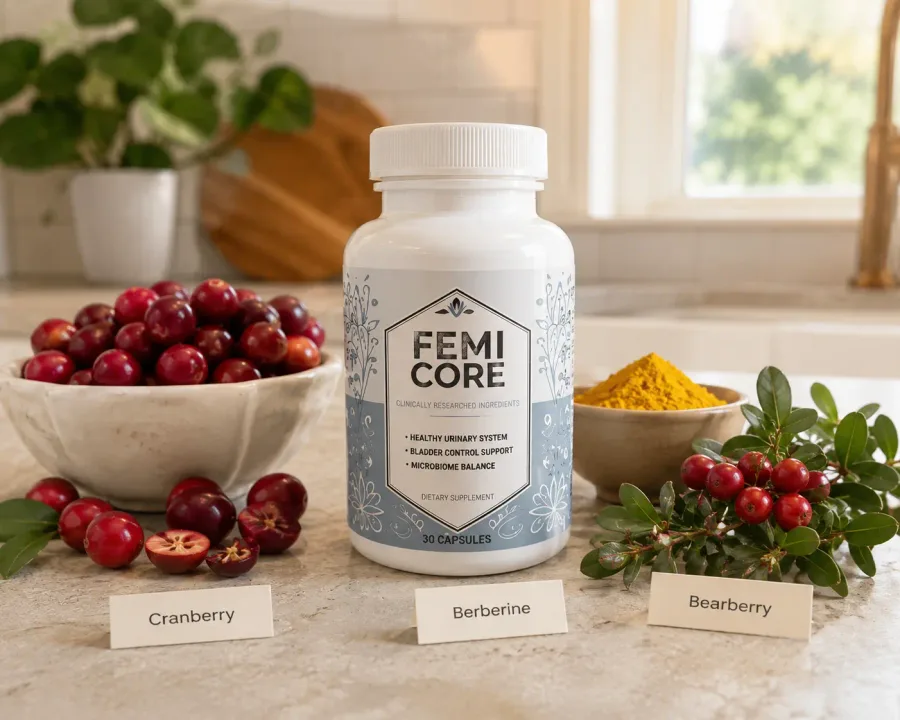
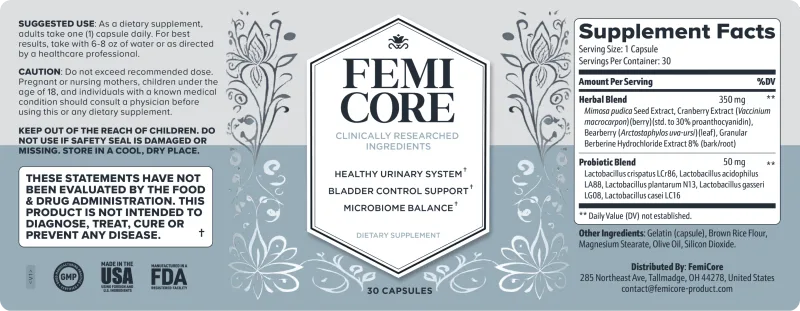
Ingredient pages are where urinary-support supplements either earn trust or lose it. FemiCore’s public materials name several familiar components — cranberry extract, bearberry (uva ursi), berberine, and probiotic support — but milligram doses are often undisclosed in the summaries used for this review.
That transparency gap is the editorial core of this page. Named ingredients create familiarity. Undisclosed amounts limit research comparison. And ingredient-level studies are not finished-product proof for FemiCore.
VIEW THE CURRENT FEMICORE OFFER →
Formula Snapshot
| Ingredient | Role in positioning | Dose transparency (this review) |
|---|---|---|
| Cranberry extract | Urinary-support botanical commonly studied at ingredient level | Often undisclosed in public summaries |
| Bearberry / uva ursi | Traditional botanical associated with urinary wellness marketing | Undisclosed |
| Berberine | Plant alkaloid discussed in metabolic/microbiome contexts | Undisclosed |
| Probiotic strains | Microbiome support described in public materials | Undisclosed / verify strain list and CFU on current label |
Cranberry Extract
What it is
Cranberry extracts are concentrated preparations from cranberry fruit, often discussed in women’s urinary-support nutrition.
Why it is included
Brands include cranberry because consumers already associate it with urinary wellness, and because cranberry preparations appear frequently in ingredient-level research conversations.
What research generally studies
Researchers have examined cranberry products in urinary-tract wellness contexts, sometimes focusing on proanthocyanidins (PACs) and bacterial adhesion pathways. General literature is accessible via resources such as NCBI.
What that does not prove about FemiCore
A cranberry study is not a FemiCore study. Extract type, PAC content, dose, and co-ingredients can differ substantially from published trial materials.
Dosage transparency
In materials used for this review, cranberry extract milligrams were often undisclosed. Without amount and standardization details, dose-matching to research is limited.
Safety context
Cranberry products are widely used as foods/supplements, but concentrated extracts can still interact with individual health contexts. Ask a clinician if you take medications with known interaction concerns or have kidney-related dietary restrictions.
Bearberry / Uva Ursi
What it is
Bearberry (Arctostaphylos uva-ursi) is a traditional botanical historically associated with urinary wellness marketing.
Why it is included
Formulas targeting women’s urinary support sometimes include uva ursi to signal a botanical, traditional approach alongside cranberry.
What research generally studies
Uva ursi has been discussed in herbal and traditional-use literature. Modern clinical expectations should not be assumed from tradition alone.
What that does not prove about FemiCore
Inclusion of the botanical name does not establish that FemiCore delivers a researched dose, standardized preparation, or clinically demonstrated outcome.
Dosage transparency
Dose was undisclosed in public summaries used for this review.
Safety context
Uva ursi is not an ingredient to treat casually as endless daily self-care for every person. Pregnancy, breastfeeding, kidney issues, and prolonged unsupervised use are common caution flags — discuss with a qualified professional.
VIEW THE CURRENT FEMICORE OFFER →
Berberine
What it is
Berberine is a plant alkaloid found in several botanicals and frequently marketed in metabolic and microbiome-related supplement contexts.
Why it is included
In a urinary-support blend, berberine is typically positioned as part of a broader wellness/microbiome narrative rather than as a single-hero cranberry alternative.
What research generally studies
Berberine appears in research related to metabolic and microbial topics. That body of work is ingredient-level and context-specific.
What that does not prove about FemiCore
Berberine research does not equal evidence that this finished FemiCore product improves urinary outcomes at its undisclosed dose.
Dosage transparency
Undisclosed in materials reviewed here — a meaningful limitation because berberine discussions are often dose-sensitive.
Safety context
Berberine can interact with medications and may be inappropriate in pregnancy or certain medical conditions. Do not add it lightly on top of prescription regimens without professional guidance.
Probiotic Strains
What it is
Public FemiCore materials describe probiotic support. Probiotics are live microorganisms intended, when consumed in adequate amounts as part of a product’s design, to support microbiome-related wellness goals.
Why it is included
Women’s urinary and vaginal wellness marketing often references probiotic strains because microbiome balance is a major consumer interest area.
What research generally studies
Specific strains and doses matter in probiotic research. Broad “probiotics help” statements are weaker than strain-identified evidence.
What that does not prove about FemiCore
Without a clear public strain list and CFU count tied to the bottle you buy, you cannot responsibly map general probiotic papers onto FemiCore.
Dosage transparency
Strain identity and amounts may be incomplete in marketing summaries. Verify on the current label.
Safety context
Most healthy adults tolerate common probiotic products, but people who are immunocompromised or critically ill should seek medical advice before use.
Ingredient Evidence vs. Product Evidence
This distinction drives the entire FemiCore evaluation:
- Ingredient evidence: studies on cranberry preparations, botanicals, berberine, or named probiotic strains in general.
- Product evidence: studies on FemiCore’s exact finished formula at labeled doses.
Public materials used for this review support discussion of the first category more than the second. That is why our flagship review frames FemiCore as a transparency-and-expectations purchase, not as proven infection therapy.
What a Transparent Urinary-Support Label Usually Shows
When comparing FemiCore with other options, look for labels that disclose:
- cranberry extract amount and, when available, PAC standardization;
- uva ursi amount and preparation type;
- berberine amount as elemental berberine or clearly identified salt/extract;
- probiotic genus/species/strain designations plus CFU at time of manufacture or end of shelf life;
- serving size and servings per container that match the usage directions.
If a competitor publishes those details and FemiCore’s live label still does not, that is a legitimate reason to prefer the clearer product — even if brand marketing sounds similar.
Practical Buyer Questions for This Formula
- Can I match each active to a milligram or CFU number on the bottle in my hand?
- Am I buying wellness support, or am I delaying care for symptoms that need a clinician?
- Do berberine or uva ursi fit my pregnancy, medication, or kidney-related risk profile?
- Does the 60-day guarantee on the official offer give me enough time to evaluate tolerability?
Those questions keep the conversation grounded in verification rather than hype. They also align with the buyer-intent patterns we cover in FemiCore reviews and complaints.
VIEW THE CURRENT FEMICORE OFFER →
Side Effects & Who Should Be Careful
Possible issues with multi-botanical plus probiotic formulas include digestive discomfort or individual intolerances. More important than a generic side-effect list: do not self-treat suspected urinary infections with supplements alone.
Be especially cautious and seek professional advice if you are pregnant, breastfeeding, have kidney or liver disease, take prescription medications, or have recurrent or severe urinary symptoms.
How to Read the Label Before You Commit
- Confirm each active ingredient amount.
- Look for cranberry standardization details if listed.
- Note probiotic strain names and CFU counts.
- Check allergen and inactive ingredient lines.
- Compare those facts to the refund window on the official offer.
VIEW THE CURRENT FEMICORE OFFER →
FAQ
Does FemiCore publish every dose?
In public summaries used for this review, doses were often undisclosed. Rely on the live Supplement Facts panel.
Can ingredients alone prove FemiCore works?
No. Ingredient research is context, not a finished-product clinical verdict.
Where should I go next?
Read reviews and complaints verification if you are still unsure about purchase risks, or the full FemiCore review for the complete editorial verdict.