Yu Sleep Review: Does This Liquid Sleep Formula Hold Up Under Scrutiny?
Affiliate disclosure: This page may earn a commission if you purchase through links to the official Yu Sleep offer. That relationship does not change our evaluation standards. We distinguish ingredient-level research from finished-product proof, and we do not treat sleep supplements as medical care.
Quick Verdict
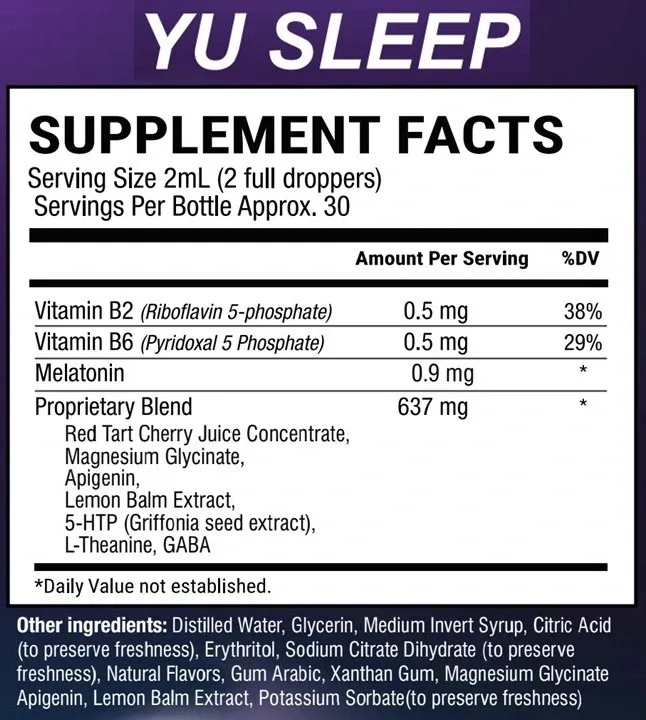
Yu Sleep is a liquid/dropper nighttime dietary supplement built around a disclosed 0.9 mg melatonin dose, vitamins B2 and B6, and a 637 mg proprietary blend that lists red tart cherry, magnesium glycinate, apigenin, lemon balm, 5-HTP, L-theanine, and GABA. The format is convenient. The ingredient names are familiar to anyone who has shopped the sleep aisle. The real limitation is transparency: most actives sit inside one combined blend, so you cannot compare each compound to doses used in clinical research.
- Best for: Adults who want a liquid nighttime formula with a modest melatonin amount and recognizable relaxation ingredients.
- Not for: Anyone expecting a cure for insomnia, a substitute for sleep-disorder evaluation, or fully disclosed per-ingredient dosing.
- Main con: Proprietary-blend dosing blocks meaningful research comparison.
- Offer snapshot: Multi-month packages around $69 / $59 / $49 per unit (2-, 3-, and 6-month supplies as observed) with a 60-day money-back guarantee on the official offer.
CHECK TODAY'S YU SLEEP OFFER →
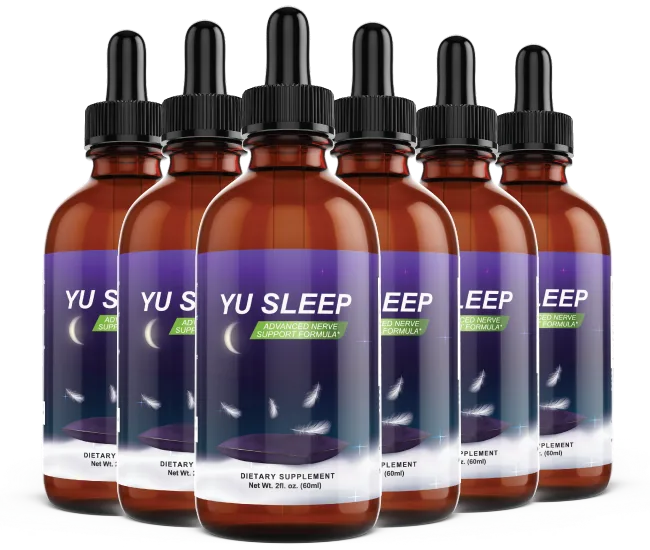
What is Yu Sleep?
Yu Sleep is positioned as a sleep-support dietary supplement in liquid form. Instead of swallowing pills, users take measured drops—often marketed as easier for people who dislike capsules or prefer flexible nighttime dosing. The product sits in the crowded U.S. sleep-supplement category, where melatonin, magnesium, botanicals, and amino-acid-related compounds are common building blocks.
As a dietary supplement, Yu Sleep is not a drug. It is not approved by the FDA to diagnose, treat, cure, or prevent disease. That legal framing matters because many shoppers arrive after weeks of poor sleep and want a clinical solution. A liquid formula can be part of a bedtime routine; it does not replace evaluation for chronic insomnia, sleep apnea, restless legs, or other medical sleep disorders.
Our editorial lens for this review is straightforward: convenience and formula familiarity on one side, dose transparency and evidence gaps on the other. For deeper ingredient notes, see our Yu Sleep ingredients breakdown. For purchase logistics, see price and where to buy.
Marketing claims vs. realistic expectations
Sleep-supplement advertising often blurs “supports healthy sleep” language with consumer hopes for faster sleep onset, fewer night wakings, or next-day energy. We keep those layers separate.
- Reasonable framing: A formula with melatonin and calming botanicals/amino compounds may help some adults wind down as part of sleep hygiene.
- Unsupported framing: Guaranteeing restored sleep architecture, curing insomnia, or treating diagnosed sleep disorders.
- Buyer reality check: Response varies. Caffeine timing, light exposure, stress, alcohol, medications, and underlying conditions usually outweigh any single dropper product.
If your sleep problems are severe, sudden, or accompanied by snoring with gasping, daytime microsleeps, or mood collapse, talk with a clinician. Supplements are not a diagnostic tool.
Formula overview
Public materials we reviewed describe Yu Sleep with:
- Melatonin: 0.9 mg (disclosed)
- Vitamin B2 (riboflavin) and Vitamin B6 (listed)
- Proprietary blend: 637 mg total, containing red tart cherry juice concentrate, magnesium glycinate, apigenin, lemon balm extract, 5-HTP, L-theanine, and GABA
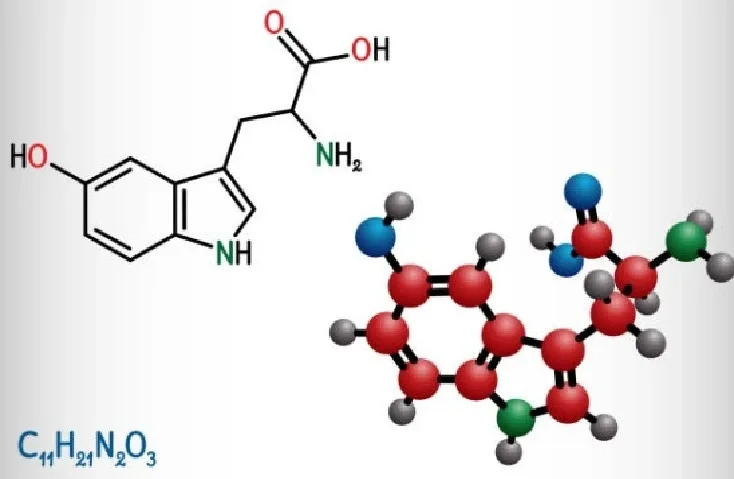
Melatonin at under 1 mg is on the lower end of what many commercial products use. That is not automatically better or worse; lower doses are sometimes preferred by people who felt groggy on higher melatonin. What you cannot verify from the proprietary blend alone is whether magnesium, L-theanine, GABA, or 5-HTP appear in amounts that match studied ranges.
CHECK TODAY'S YU SLEEP OFFER →
Ingredients at a glance
Here is a plain-language map of the disclosed label story. Individual blend amounts are undisclosed unless stated otherwise on a current bottle label you can verify yourself.
| Component | Role (general category) | Dose transparency |
|---|---|---|
| Melatonin | Sleep-timing / circadian support ingredient | 0.9 mg disclosed |
| Vitamin B2 | Essential vitamin support | Listed; confirm label for exact amount |
| Vitamin B6 | Essential vitamin often discussed in mood/sleep nutrition | Listed; confirm label for exact amount |
| Red tart cherry | Botanical / juice concentrate often linked to sleep marketing | Inside 637 mg blend |
| Magnesium glycinate | Magnesium form popular in nighttime formulas | Inside 637 mg blend |
| Apigenin | Flavonoid (e.g., chamomile-associated compound) | Inside 637 mg blend |
| Lemon balm | Traditional calming botanical | Inside 637 mg blend |
| 5-HTP | Serotonin-pathway related compound | Inside 637 mg blend |
| L-theanine | Amino acid associated with relaxed alertness research | Inside 637 mg blend |
| GABA | Inhibitory neurotransmitter discussed in relaxation contexts | Inside 637 mg blend |
For a fuller ingredient-by-ingredient discussion—including why blend opacity is the central criticism—read the ingredients page.
Research distinction: ingredients ≠ product proof
Sleep research exists for melatonin and, to varying degrees, for magnesium, L-theanine, lemon balm, tart cherry, and related compounds at the ingredient level. Databases such as PubMed / NCBI index many of those studies. That literature does not automatically transfer to Yu Sleep as a finished product.
Three distinctions matter:
- Dose match: If a study used 200 mg of L-theanine and your blend share is unknown, you cannot assume equivalent exposure.
- Combination effects: Stacking seven blend ingredients plus melatonin may help, hinder, or do little—without product-specific trials, that is speculation.
- Population mismatch: Lab or small clinical samples rarely mirror every U.S. consumer dealing with shift work, anxiety, or undiagnosed apnea.
Our standard is conservative: recognizable ingredients can make a product plausible as a wellness aid. They do not make it proven for insomnia treatment.
Pros
- Liquid dropper format may be easier than capsules for some users and allows measured nighttime use.
- Disclosed melatonin at 0.9 mg is transparent and relatively modest compared with high-dose melatonin SKUs.
- Familiar ingredient roster—magnesium glycinate, L-theanine, lemon balm, tart cherry—matches what many educated shoppers already research.
- B vitamins listed alongside the sleep stack, which some buyers prefer in a single nighttime product.
- Multi-month pricing tiers and a 60-day money-back guarantee (as observed on the official offer) reduce some purchase risk if refund terms are followed.
Drawbacks
- Proprietary blend (637 mg) hides individual amounts—this is the primary editorial con and the angle that most affects evidence-minded buyers.
- No substitute for medical sleep care. Chronic insomnia and sleep disorders need professional pathways, not dropper marketing.
- Finished-product clinical evidence specific to Yu Sleep is not something we treat as established from public marketing materials alone.
- Direct-response style offers can pressure larger bundles; the lowest per-unit price usually requires buying more upfront.
- Taste and compliance vary with liquids; some users abandon droppers they dislike flavor-wise.
Safety and practical cautions
Dietary supplements can interact with medications and are not appropriate for everyone. Melatonin, 5-HTP, and calming botanicals deserve extra caution if you take antidepressants, sedatives, or other CNS-active drugs. Magnesium can affect people with kidney impairment. Pregnancy, breastfeeding, and use in minors require clinician guidance.
Practical tips that are not medical advice:
- Start on a night when you do not need to drive or operate machinery afterward.
- Keep caffeine, alcohol, and late heavy meals in view—they often dominate sleep outcomes.
- Stop and seek care if you notice unusual mood changes, allergic reactions, or worsening daytime function.
- Read the current label for allergens, serving size, and warnings before first use.
Who it may suit
Potentially a fit if you: prefer liquids; want modest disclosed melatonin; already understand that sleep hygiene matters; and can accept incomplete blend dosing as a trade-off for convenience.
Probably a poor fit if you: need fully transparent milligram amounts for every active; are seeking treatment for diagnosed insomnia or apnea; want peer-reviewed proof on the finished Yu Sleep formula; or dislike proprietary blends on principle.
Price and packages
Pricing observed on the official-style offer structure:
| Package | Approx. price each | Notes |
|---|---|---|
| 2-month supply | $69 | Higher per-unit cost |
| 3-month supply | $59 | Mid-tier |
| 6-month supply | $49 | Lowest per-unit cost observed |
Confirm live checkout totals, shipping, and any subscription language before paying. Full breakdown: Yu Sleep price & where to buy.
CHECK TODAY'S YU SLEEP OFFER →
Guarantee
The official offer materials we reviewed describe a 60-day money-back guarantee. Refunds typically require following the seller’s return instructions within the stated window. Keep order emails and note whether opened bottles are eligible. Guarantees reduce financial risk; they do not prove the product works for you.
Where to buy
For authenticity and access to the advertised guarantee, prioritize the official Yu Sleep offer page. Marketplace listings can vary in freshness, seller identity, and refund handling. If a deal looks far below the official tiers, treat it as a red flag until verified.
Reviews and complaints context
Online sleep supplements attract polarized feedback: some users report easier wind-down; others report no change, taste issues, delayed shipping, or refund friction. We do not invent complaint statistics. Pattern-wise, direct-to-consumer supplements often draw questions about expectations versus results and about customer-service timelines. Read our dedicated reviews & complaints guide for how to evaluate claims without cherry-picking testimonials.
Is Yu Sleep legitimate?
“Legitimate” as a sold dietary supplement is different from “peer-reviewed sleep therapy.” Yu Sleep appears as a commercial liquid sleep formula with a recognizable ingredient list and a structured multi-bottle offer. Legitimacy in the marketplace sense does not erase the proprietary-blend transparency problem or the need for realistic expectations. Watch for exaggerated cure language on any landing page—that is a marketing problem, not a green light.
Alternatives to consider
- Single-ingredient melatonin at a dose you and your clinician agree on, for simpler titration.
- Standalone magnesium glycinate if magnesium is your priority and you want a clear milligram amount.
- L-theanine alone for daytime or evening calm without a full proprietary stack.
- Non-supplement paths: consistent schedule, light management, CBT-I style approaches, and medical evaluation when indicated.
Stacks are convenient; transparency is often better with simpler products.
Final verdict
Yu Sleep is a convenient liquid sleep-support formula with a disclosed 0.9 mg melatonin dose and a familiar supporting cast inside a 637 mg proprietary blend. That blend is the editorial sticking point: without individual amounts, research-minded shoppers cannot honestly map the formula to clinical dose ranges. Use it—if you use it at all—as a wellness experiment with a refund window, not as treatment for insomnia or other sleep disorders.
If liquid format and modest melatonin appeal to you, and you accept the transparency trade-off, the official offer is the cleanest purchase path. If dose disclosure is non-negotiable, look elsewhere or build a simpler stack yourself.
Prefer a short visual overview? See the Yu Sleep video review.
CHECK TODAY'S YU SLEEP OFFER →
FAQ
Does Yu Sleep cure insomnia?
No. It is a dietary supplement for sleep support positioning, not a cure or treatment for insomnia or other sleep disorders.
How much melatonin is in Yu Sleep?
Public materials list 0.9 mg of melatonin per serving context reviewed for this article. Always confirm the current label.
Why is the proprietary blend a con?
Seven ingredients share 637 mg. You cannot tell how much magnesium, L-theanine, GABA, or 5-HTP you actually get, which limits comparison to published research doses.
Where is the best place to buy Yu Sleep?
The official offer linked from this review is the preferred channel for advertised pricing and the 60-day guarantee terms.
Is 0.9 mg melatonin “enough”?
Enough is individual. Some adults prefer lower melatonin; others use different amounts under professional guidance. More milligrams are not automatically better.