FemiCore Reviews and Complaints: A Buyer Verification Guide
Disclosure: This page contains affiliate links. If you purchase through one of these links, we may earn a commission at no additional cost to you. This does not change the price you pay.
If you're searching for FemiCore reviews and complaints, you're probably past the marketing stage. You want to know what could go wrong before spending money — not another page of unverified praise.
This article does not invent customer complaints, star ratings, or success percentages. Instead, it walks through the verification checklist buyers actually need for a women’s urinary-support supplement sold mainly through an online offer.
VIEW THE CURRENT FEMICORE OFFER →
Why “Reviews and Complaints” Searches Matter Here
Urinary-support products attract high skepticism for good reasons. Symptoms can be medical, not lifestyle. Marketing often borrows ingredient-level research. Online offers can look similar across brands. Buyers therefore search for complaints to spot refund friction, dosing opacity, and overclaiming.
Those concerns are legitimate. They are also easy to exploit with fabricated testimonials. Our approach is the opposite: document what can be checked, and clearly mark what cannot.
What to Investigate Before You Buy
1. Product identity
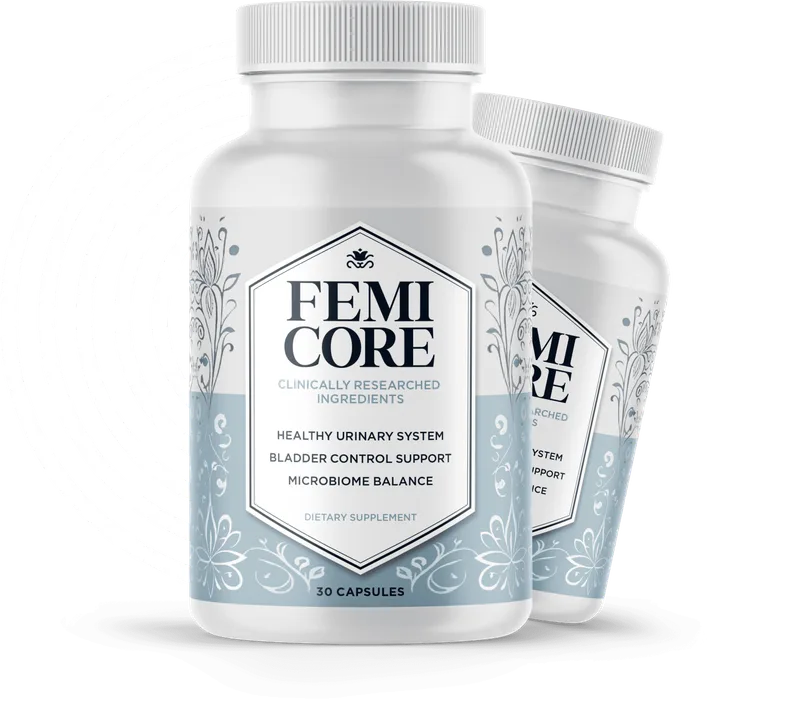
Confirm you are looking at the FemiCore women’s urinary-support formula from the official offer materials — not a lookalike name, a different SKU, or a random marketplace listing with sparse seller information. Package images and checkout branding should match.
2. Formula transparency
Public materials commonly name cranberry extract, bearberry/uva ursi, berberine, and probiotic support. Naming ingredients is a start. A careful buyer still asks whether the label discloses extract standards, strain IDs, and amounts. See the full ingredients breakdown.
3. Dosage transparency
In materials used for this review, doses were often undisclosed. That is one of the most common friction points in complaint-intent research: people feel they cannot compare the bottle to published research. If milligrams and CFU counts are missing from the live label, treat that as a purchase risk factor — not a detail to ignore.
4. Expectation vs. marketing
If advertising language implies infection treatment, rapid symptom resolution, or a substitute for clinical care, recalibrate. FemiCore is a dietary supplement positioned for urinary-support wellness. Suspected UTIs and serious urinary symptoms require professional evaluation. Supplements should not delay that care.
5. Pricing
Observed official packages: 2 bottles at $79 each; 2 + 1 at $69 each; 3 + 3 at $49 each. Complaint-intent buyers often feel pressured by “best value” bundles. Decide whether a larger supply matches your risk tolerance and refund window. Details: FemiCore price and where to buy.
6. Refund conditions
A 60-day money-back guarantee has been observed on the official offer. Read how to request a refund, whether bottles must be returned, and how long processing takes. A guarantee on a sales page is only as useful as the operational steps behind it.
7. Purchase channel
Official-offer purchases are generally easier to verify than unknown third-party storefronts. Unauthorized sellers can introduce authenticity questions and mismatched refund policies — a frequent theme in consumer complaint research across this category.
8. Shipping and availability
Online-only offers may show shipping estimates at checkout. Keep confirmation emails. If delivery timing matters for you, verify it before ordering rather than assuming retail-store immediacy.
9. Evidence limitations
Ingredient research on cranberry or probiotics is not a clinical trial of FemiCore. Finished-product evidence specific to this formula appears limited in public materials used for this review. That gap is central to honest “does it work?” searches.
10. Who should seek professional advice first
Seek care promptly for fever, flank pain, blood in urine, pregnancy-related urinary symptoms, recurrent infections, or symptoms that worsen. Also consult a clinician or pharmacist if you take medications, have kidney or liver conditions, or are pregnant or breastfeeding before using botanicals such as uva ursi or berberine.
VIEW THE CURRENT FEMICORE OFFER →
WHAT WE COULD VERIFY
- FemiCore is publicly positioned as a women’s wellness / urinary-support dietary supplement.
- Public brand materials commonly reference cranberry extract, bearberry/uva ursi, berberine, and probiotic support.
- Official-offer package pricing has been observed at $79 (2 bottles), $69 (2 + 1), and $49 (3 + 3) per bottle.
- A 60-day money-back guarantee has been observed on the official offer.
- An official affiliate offer URL is published for this product review cluster.
- A related product video is available on YouTube (ID: Xwk-Tm6DVv8) and embedded on our video review page.
WHAT WE COULD NOT VERIFY
- Complete, consistently published milligram doses for every active ingredient across all public marketing summaries used for this review.
- A full, stable public list of probiotic strains and CFU counts without checking a live product label.
- Finished-product randomized clinical trials proving FemiCore treats or prevents urinary tract infections.
- Independent, auditable complaint rates, refund rates, or “X% of customers…” statistics for FemiCore.
- That every third-party marketplace listing is authorized or covered by the same 60-day guarantee.
- Individual customer outcomes — positive or negative — without inventing testimonials we do not have.
Common Objection Themes (Without Invented Stories)
Across this product category — not as fabricated FemiCore case files — careful buyers repeatedly raise the same objections:
- Overpromised results: confusing wellness support with infection treatment.
- Opaque dosing: named botanicals without clear amounts.
- Bundle pressure: large packages that raise the upfront cost.
- Refund logistics: uncertainty about how to actually use a guarantee.
- Seller confusion: official offer versus unauthorized resellers.
If those themes match your hesitation, they are rational purchase filters. Use them to interrogate the live offer rather than hunting for unverifiable complaint tallies.
VIEW THE CURRENT FEMICORE OFFER →
How This Fits With Our Full Review
For the complete pros/cons narrative, pricing table, and FAQ, read the flagship FemiCore review. For safety and dose-context detail, use the ingredients page.
Editorial stance: legitimacy of an online supplement offer and clinical strength of evidence are separate questions. You can verify the first with checkout and label checks. The second requires product-specific data that public marketing often does not supply.
A Practical Pre-Purchase Script
Before you click buy, answer these in writing:
- What symptom or goal am I actually trying to address?
- Have I ruled out the need for clinical evaluation first?
- Can I see doses and strain details on a current label or clear Supplement Facts image?
- Which package am I choosing, and why that size rather than a smaller test purchase?
- Do I understand the exact refund steps within 60 days?
If you cannot answer those cleanly, pause. Complaint-intent searching is often a signal that the offer still feels under-specified — and that instinct is useful.
VIEW THE CURRENT FEMICORE OFFER →
FAQ
Are there verified FemiCore complaint statistics on this page?
No. We do not publish invented percentages or fabricated customer stories. We document verification points and evidence gaps instead.
Is FemiCore a scam?
Public offer materials present a real commercial supplement with package pricing and a stated refund window. That is not the same as proving clinical effectiveness. Evaluate both layers separately.
What is the biggest complaint-risk factor?
From an editorial standpoint: mismatched expectations (treating a wellness supplement like infection therapy) combined with incomplete dosage disclosure in public summaries.